
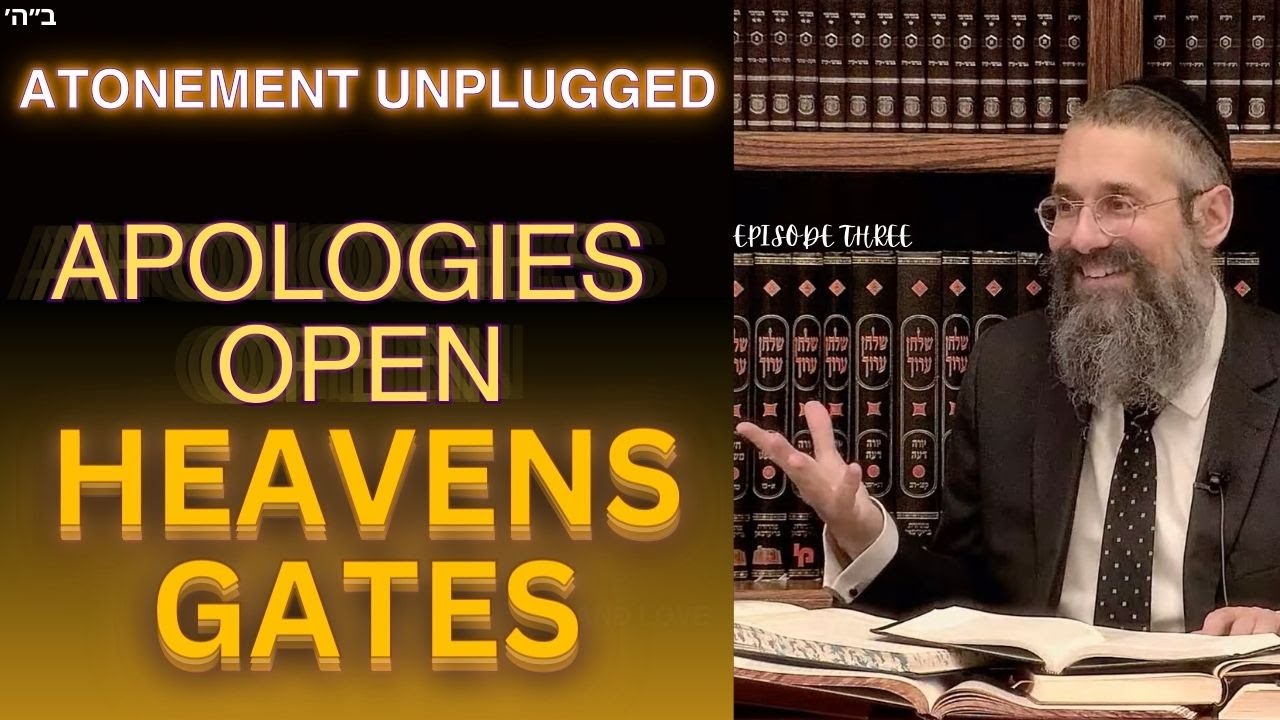
✨ ATONEMENT UNPLUGGED ✨
A Mini-Series on Kapparah – The Nature of Divine Forgiveness
Tom’s Talmud Tisch on the Power of Teshuvah and Yom Kippur | Tractate Yoma 85b
Join us for a textually grounded, in-depth Talmud study as we explore the timeless wisdom of our Sages on Yom Kippur and the transformative power of Teshuvah. Together, we’ll uncover how the Day of Atonement effectuates Kapparah, the unique role of Temple service, and what remains for us today in a post-Temple reality.
📖 Source Text: Tractate Yoma 85b | “How Apologies Open Heaven’s Gates”
🎙 Episode Three: Why Yom Kippur Won’t Work Until We’ve Apologized & Reconciled
Overview
This session examines the third section of the Mishnah on Yoma 85b, which draws a sharp distinction between sins between a person and G-d versus sins between a person and their fellow:
~ For sins against G-d, sincere Teshuvah (confession, regret, and resolve) allows Yom Kippur itself to bring Atonement.
~ But for sins against another person, Yom Kippur does not atone until reconciliation and forgiveness are sought.
~ Strikingly, the Mishnah supports this ruling with an exegetical proof from Torah—a rare move that underscores its profound importance.
We Will Explore:
~ The “Statute of Limitations” on Atonement: Can the offended party block another’s spiritual rehabilitation?
~ The Scope of Atonement: Is forgiveness “compartmentalized” or does one failure impede all?
~ Scriptural Backing: Why did the Sages feel the need to anchor this law in a biblical verse, unlike other rulings?
Practical Application:
Is it the act of apologizing that opens Heaven’s gates—or must the apology be accepted for Atonement to take effect?
Takeaway:
Participants will gain a deeper appreciation of how interpersonal ethics are integral to spirituality. Can one truly connect with G-d while mistreating others? The Mishnah’s answer is both challenging and inspiring.
✨ This class is the third installment of a multi-part journey, b’ezrat Hashem, into the depth and eternal inspiration of Yom Kippur.
Add comment